Taking Time… A Family Travel Scroll

Why go travlling if it’s just a quick trip to sit on a beach, spew out tons of carbon and rip home again wondering what the heck that blip of time just was? Sure it can be fun, and often that’s all the chance you get. We’d been planning on a big trip for years, knowing grandparents were missing out on seeing their little people not-so-gradually become big people, and if we were there for a decent amount of time we could really bank some decent memories.

There’s this, plus we were feeling a need to scratch some itchy travel feet and experience some different parts of the world. I mean we love the Northern Rivers, but… you know. So we did a whole heap of preparation, a bit of saving and maybe too much dreaming and decided we’d go for a good while.

Four months for some things is quite quick, whilst for others it’s an eternity.

Four months of travel, visiting friends and families, volunteering on organic farms, and chasing the snow all the way to the arctic circle has felt like years. Each month divided into people and places. The whole family being thrown in to all kinds of new and interesting learning environments, inspiring situations and growth opportunities.

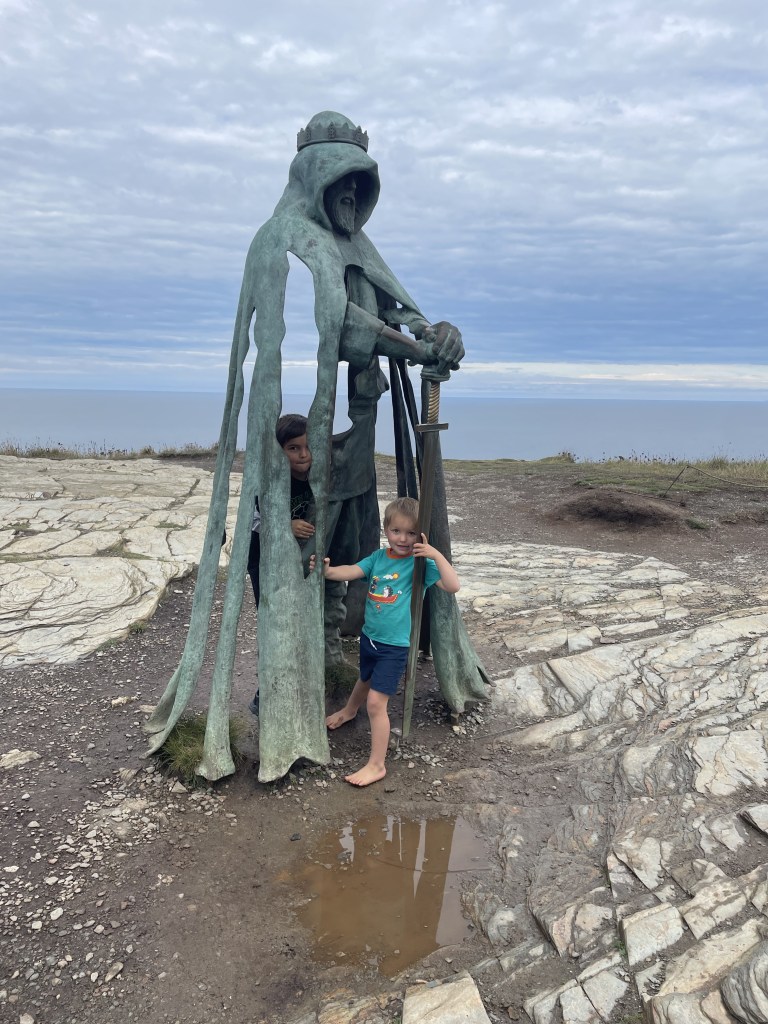
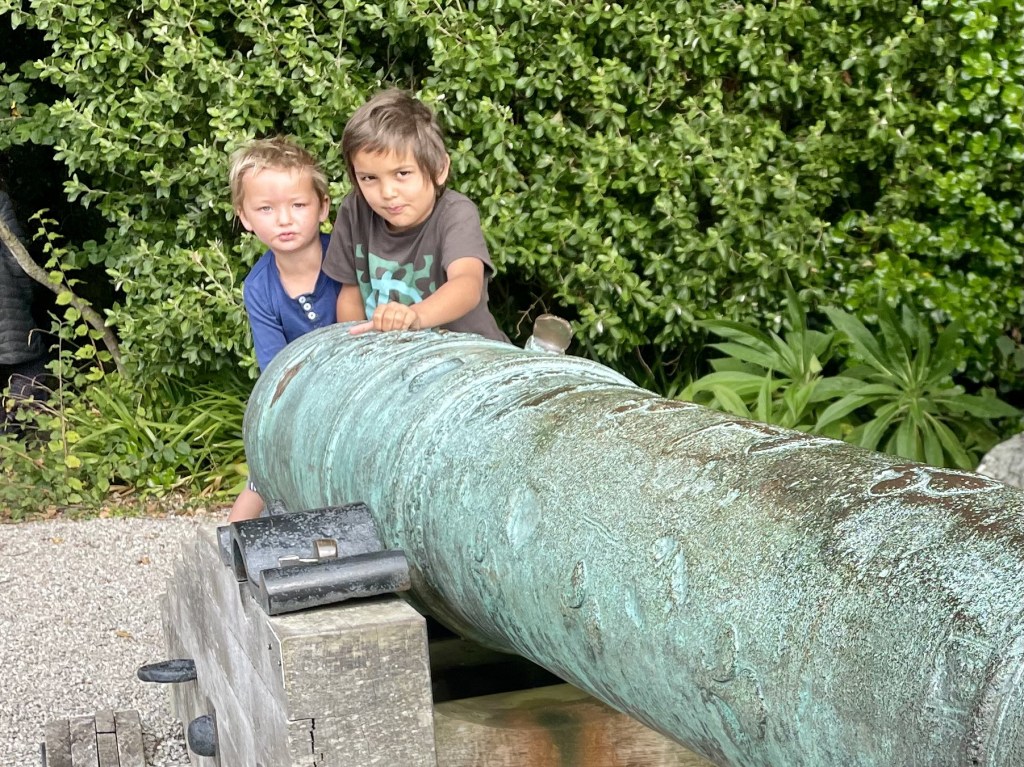
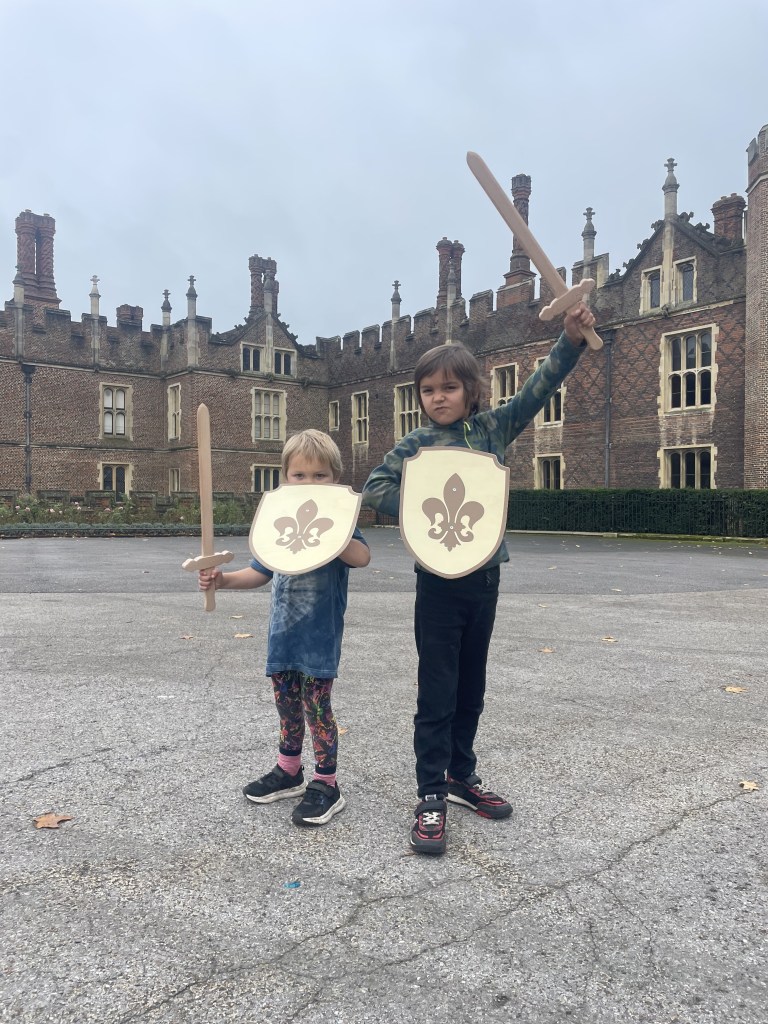
In the first month or so we travelled with our extended family to the Isles of Scilly, via a gorgeous tipi campsite, King Arthur’s castle ruins, and the enthralling Museum of Withcraft and Wizardry. Along the way having the chance to do a spot of fishing, some lovely coastal hikes, and have our first taste of real West Country Cider. Whilst an overnight stay in Glastonbury saw us running up the Tor, and into the Abbey, getting our King Arthur fix with wooden swords in one hand and umbrellas in the other.

When we finally arrived upon the Scillys we kayaked, paddle boarded and spent most days cycling around the island of Tresco like a gang of giggling, mostlly harmless, delinquents.

Whilst on the Scilly’s we were told our sweet Terrier, Zita had been found with a large paralysis tick, and wasn’t looking too well. Unfortunetly, this being the third time she had been knocked down by the wee beasts, she didn’t make it. With sore red eyes and heavy hearts we made her a little shrine on one of the islands lookouts, and sang her praises knowing she crossed the rainbow bridge with flair.

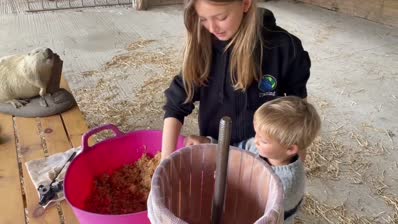
From the Scilly’s we ventured into a new realm of WWOOFing as a family. Whilst we’ve had many WWOOFers at Djaning, we’ve never been WOOFing as a family. Between two farms – Woodland Valley Farm and Middle Ruckham Farm – we spent just over a month chopping wood, tending a herd, harvesting and processing apples and having an all round interesting and fun time as a family. With us being constantly in awe of just how resilient and adaptable our children really are.

There’s a little video of us creating some cider and apple juice at Woodland Valley Farm below:

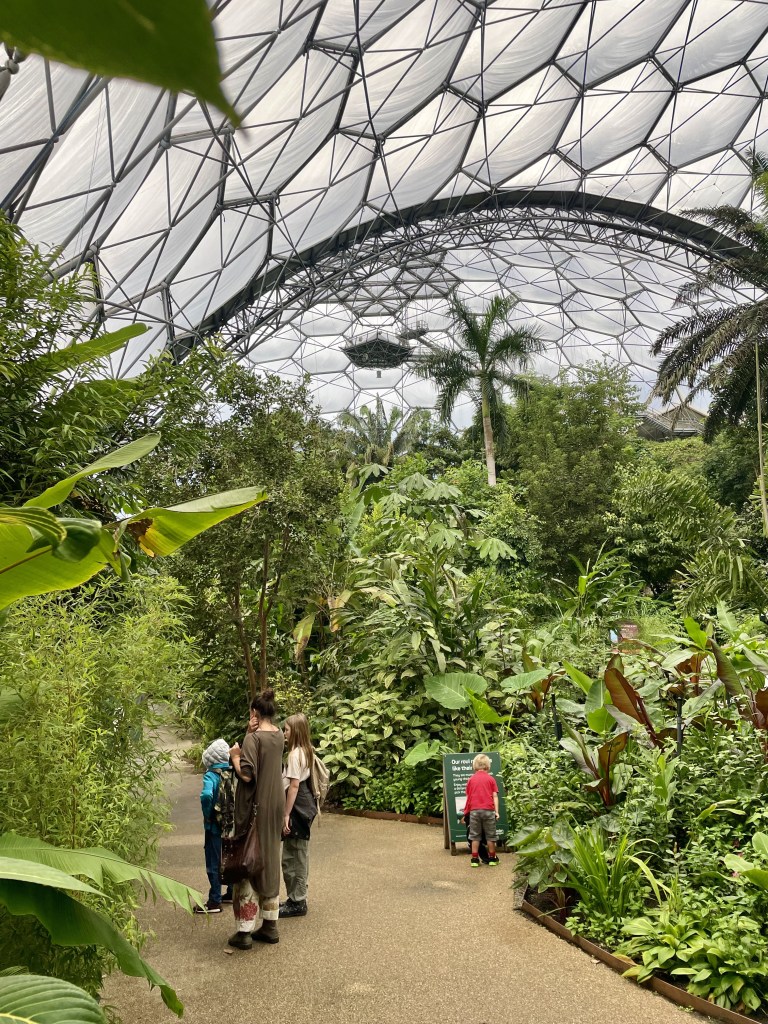
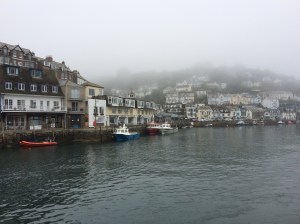
From being warmly welcomed and put to work on these wonderful and productive farms, spending a couple of days at the Lost Gardens of Heligan and the Eden Project, We had a few dreamy days in the Cornish fishing vilage of Looe. We’d visited Looe many years ago when there was only one very small child in tow and found it a tourist mecca and hard to navigate through all the people. This time we arrived out of season and it very much seemed like a small fishing vilage should. Besides eating some of the world’s best pasties, we spent many hours dropping our nets in the river mouth, catching crabs, examining them and placing them back. This seemingly banal activity was honestly so much fun, cheap, and engaging for all of us it’s hard not to include it in our travel scroll.

Once we’d caught and released well over one hundred crabs, packed up our things from our little cottage, we were all excited to head up to Wales to meet up with Laura’s brother, his wife and their two boys. We had an unscheduled stop on the way with our old family camper van experiencing major engine troubles. Which saw us entertaining kids on the edge of a major motorway. Yay!

After some “faffing’, we made it to the hills and valleys of old South Wales. We gladly offered our newly honed family working skills. Yet besides a brief morning of concreting and another prepping a couple of veg beds, we were mostly wined, dined and entertained with true British, familial hospitality.

It’s around this part of the trip we began to feel a little beleaguered. With children beginning to flat out refuse to do any of the “three R’s” they had assured us they would happily undertake, and a general feeling of homesickness, we decided to stack functions and reinvigorate ourselves with study of the places and cultures which the next part of our trip would take us to; an epic train trip to, The Arctic Circle!

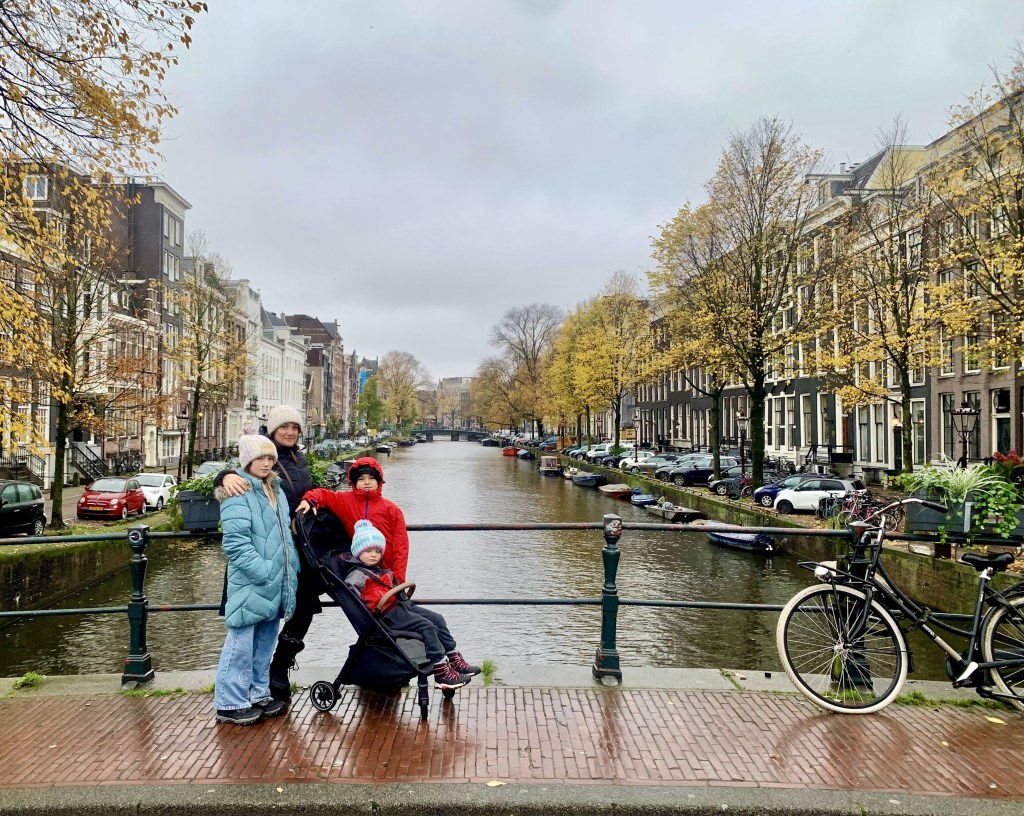
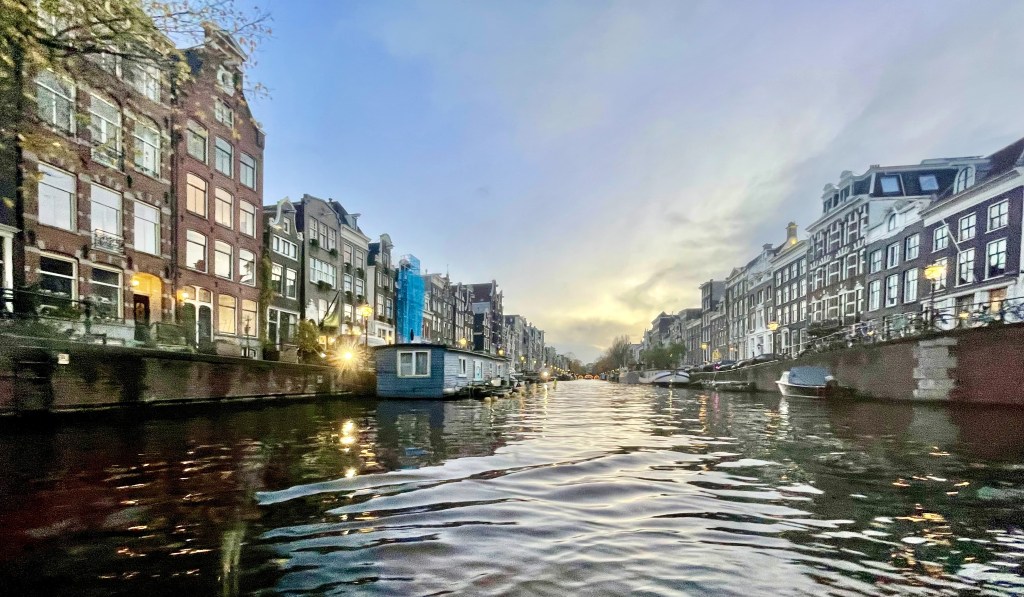
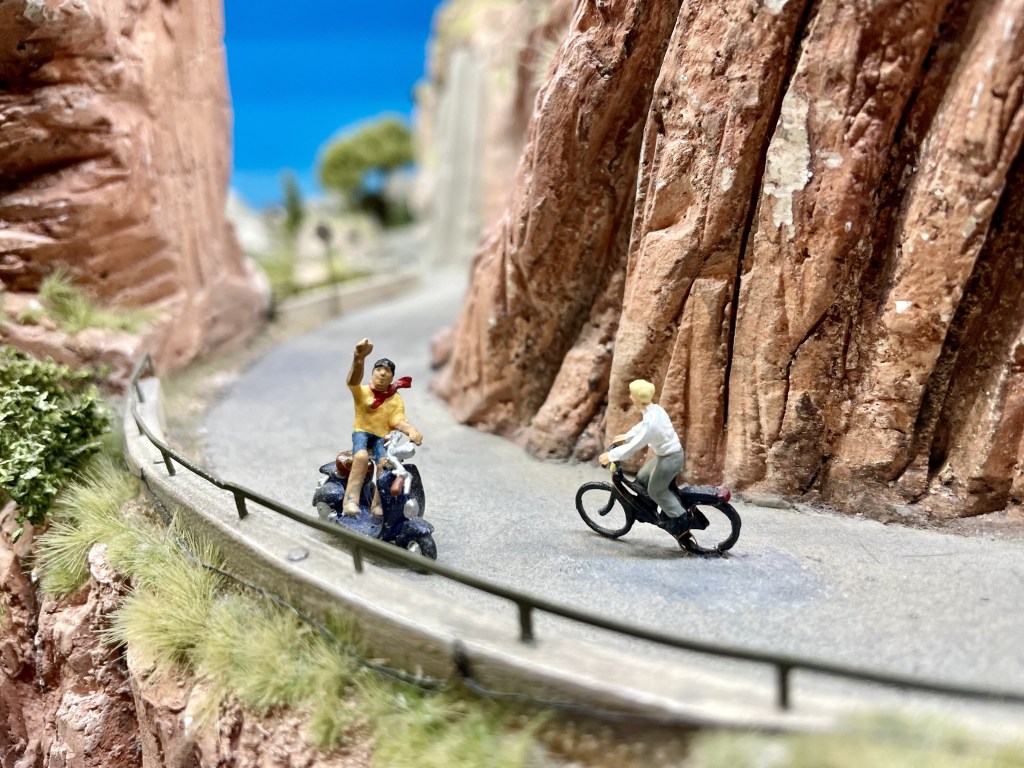
Train hopping our way from London all the way to Rovaniemi in northern Finland was, and has been one of the most exciting trips our wee family has ever undertaken. We stopped along the way at a few cities, the first being Amsterdam, where we gawked at some Van Gogh, and disturbed an otherwise peaceful canal cruise. In Hamburg we got giddy with excitement at Miniature Wonderland – which is surprisingly better than it sounds – and experienced our first snow fall.

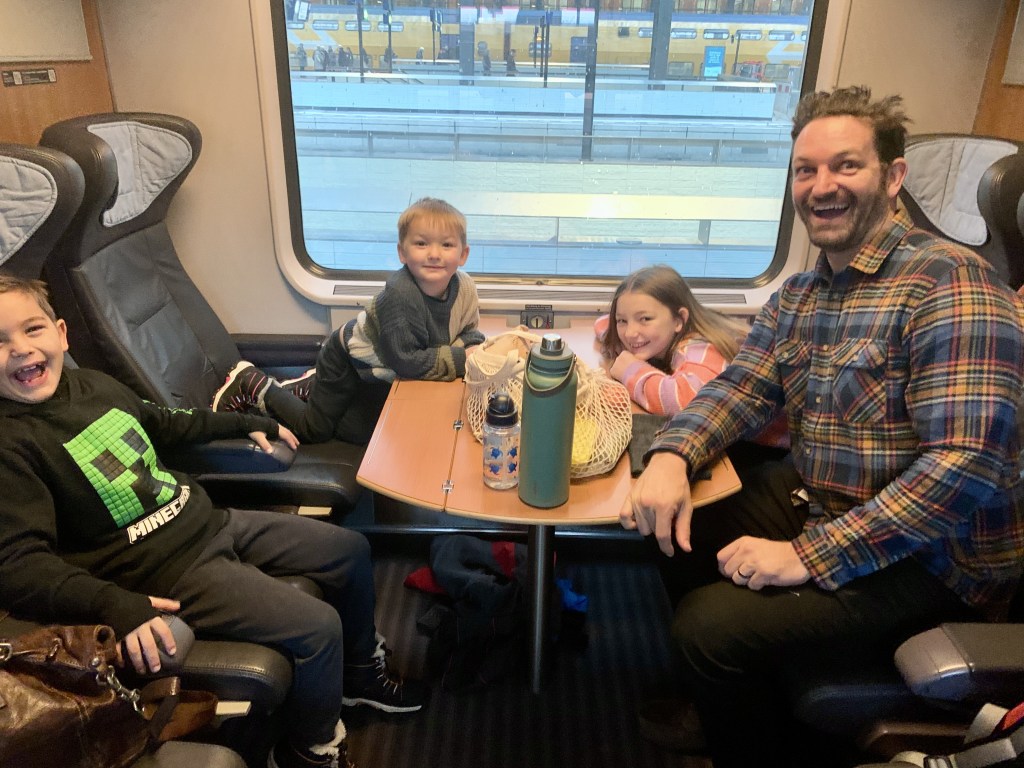
The train ride from Hamburg to Copenhagen was like a dream. It left us with the complete comprehension that planes suck and trains rule. The kids built cubbies between the super spacious chairs, the customs officials made jokes with us, and it began to snow like a christmas card. Laura said, and says, “The best and most memorable train ride I’ve ever been on!”

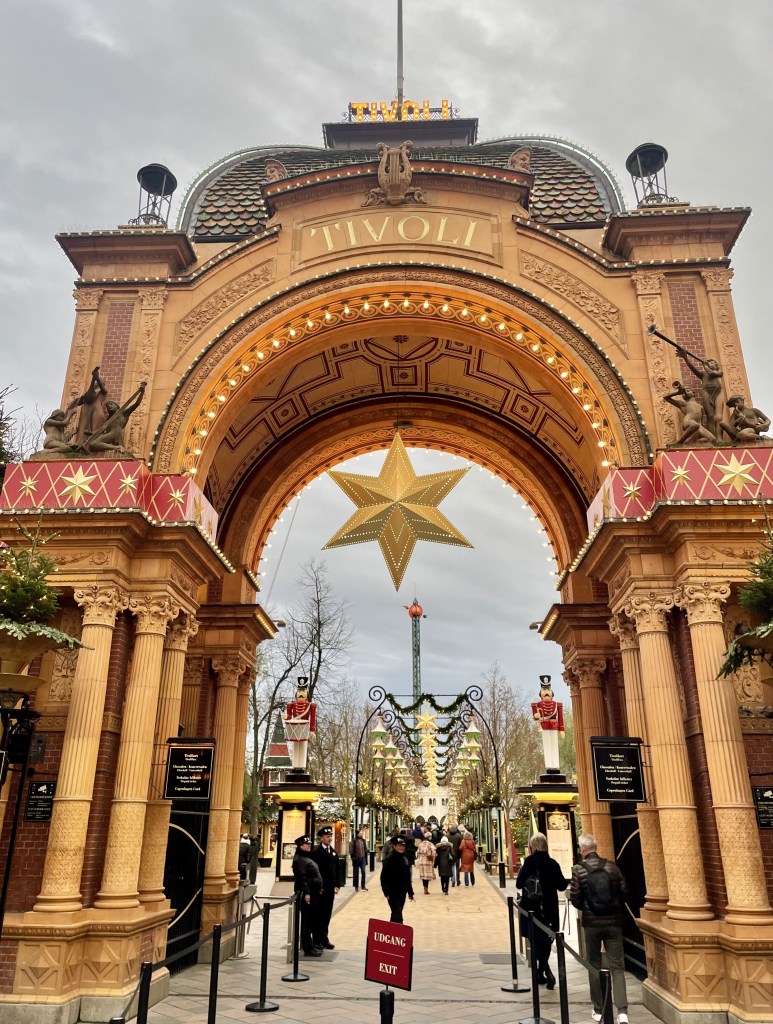
Copenhagen. What a city! On a short bus tour we were told that in the 17th century, King Christian IV inherited a wealthy country, only to spend it all and leave the country in financial ruin due in large part to him splashing out on public works. It shows. What a picturesque and fairy tale laden city! We spent our big boy’s 8th birthday here and had no where else to go (not) except for one the oldest (and classiest) theme parks in the world: Tivoli Gardens.

We had to peel the kids away from the National Museum of Denmark with all of its hands-on activities and exhibits, so we could get another sweet train ride. This time to Stockholm. We stayed in the old town Gamla Stan, which is super pretty, but like most super pretty parts of old cities it was packed with people like us, over priced Bubble Tea, and shop upon shop of “I am a Swedish Viking” t-shirts. We did however visit the Vasa Museum which is super interesting, if not quite bizarely funny. An enourmous building on the harbour dedicated to a ship that was as poorly designed as it was expensive, which sank 15 minutes into it’s maiden voyage, though because it’s from the 17th century it was a real time travelling treat.
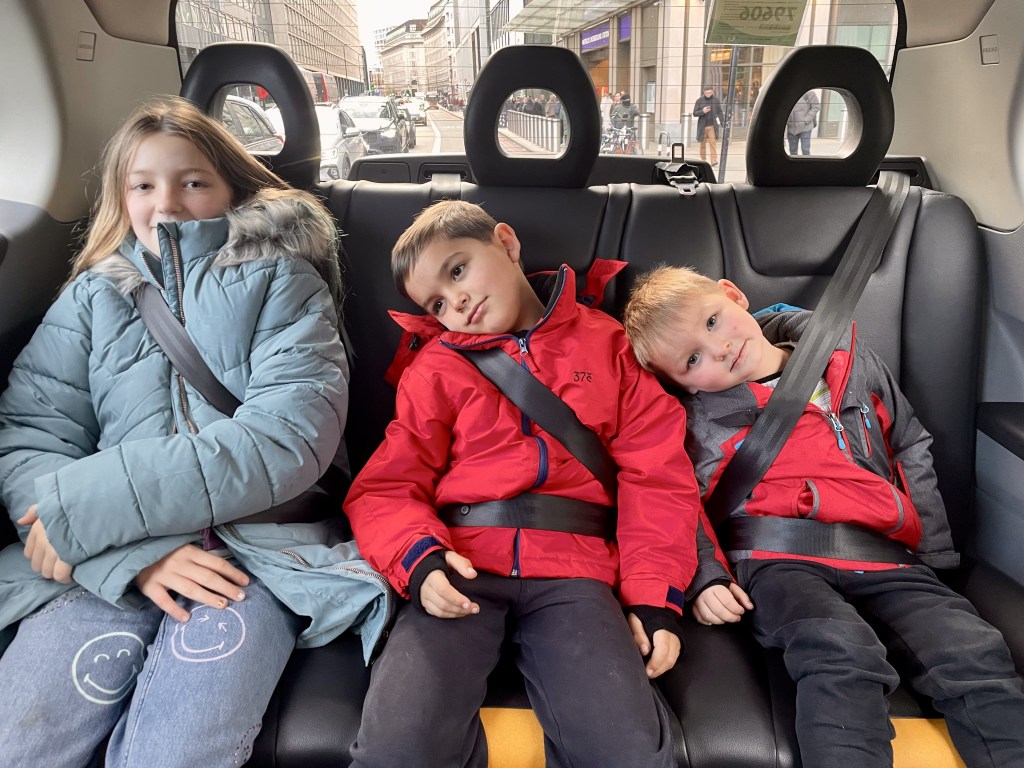
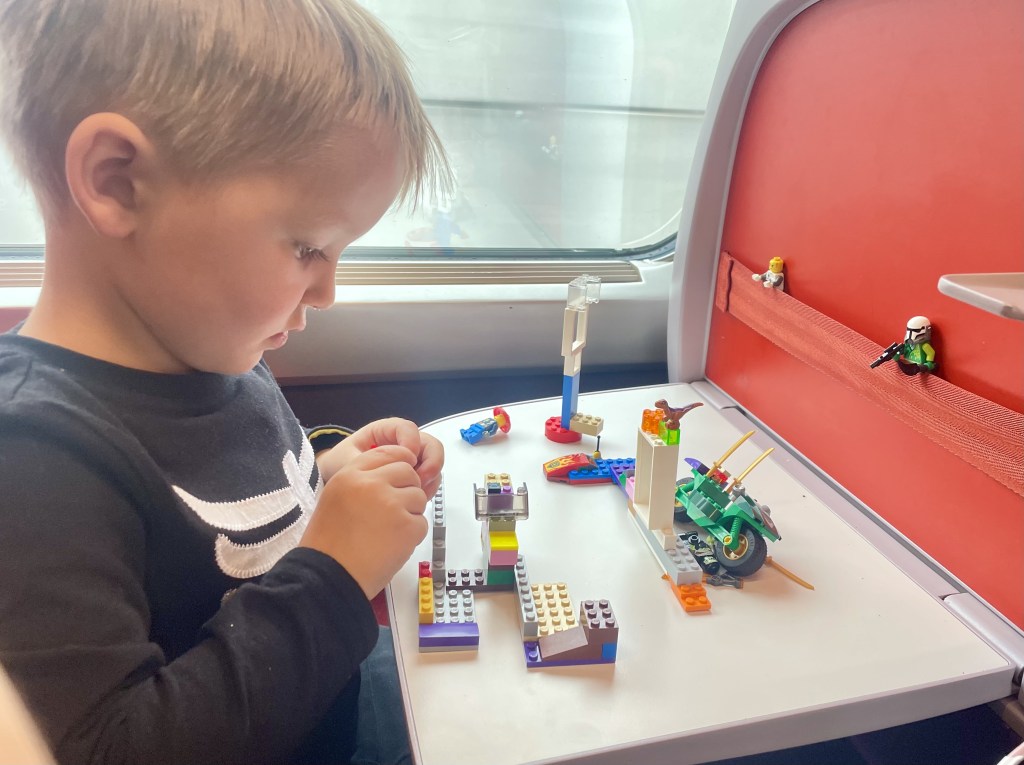
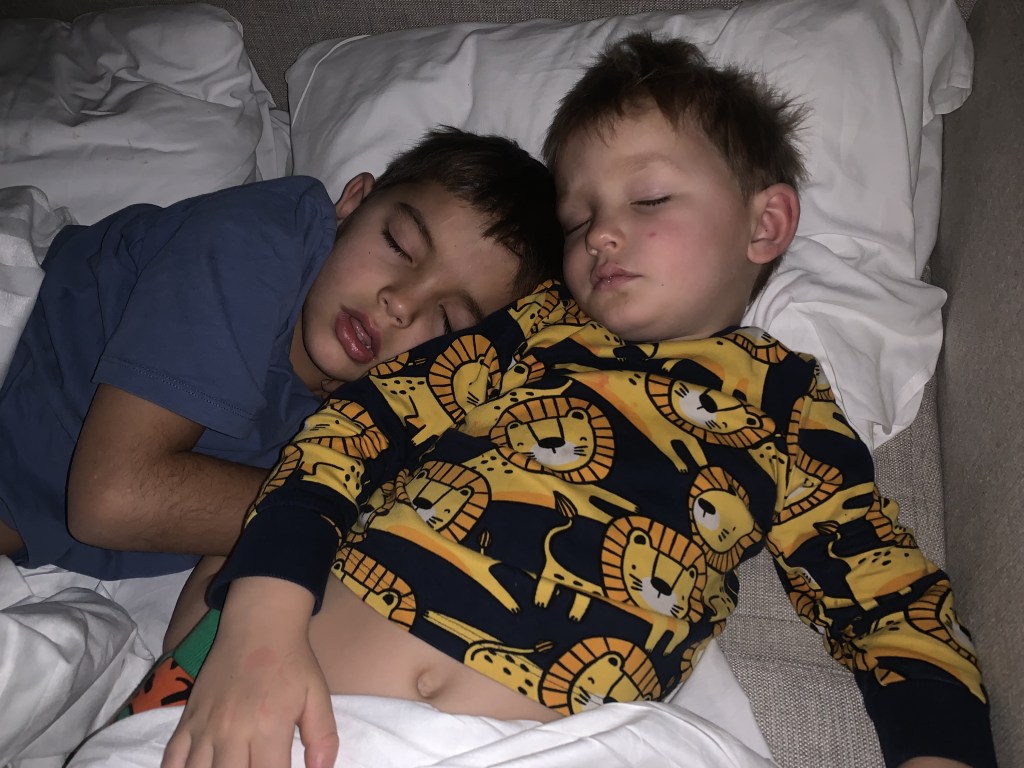
An overnight ferry from Stockholm to Helsinki sounds like a non event of sorts. Well that’s what we thought. The Silja Line, or The Ferry, is a cruise ship. We mean, some people were all ready and pumped to go on their cruise ship, but we had no idea. It’s like seeing an epic film for the first time without even seeing the trailer; hard not to be excited once you get going. Cruise’s have never been our ‘thing’ and we would probably never book one, but unexpected ball pits, free video games, dance shows, kids disco, restaurants, you know, the works! It was ridiculous, exciting and likely too much fun. Everyone was up way past bed time.

Arriving in Helsinki we could see the Russification project of the 1800s in effect. Cool art neveau buildings and trams, rubbing shoulders with Russian inspired monuments made it feel like we were finally somewhere really different. We were no longer in Western Europe. And it felt great.

Funnily enough in such a cultural epicentre, pre-kids we may have gone to the UNESCO World Heritage Island Suomenlinna (which apparently also teems with Russian presence), or gotten another boat over to Estonia’s picturesque Tallinn. But no. We just had to go to Leikkiluola, which litterly translates as Play Cave. Yep, Play Cave. And we were there for hours.

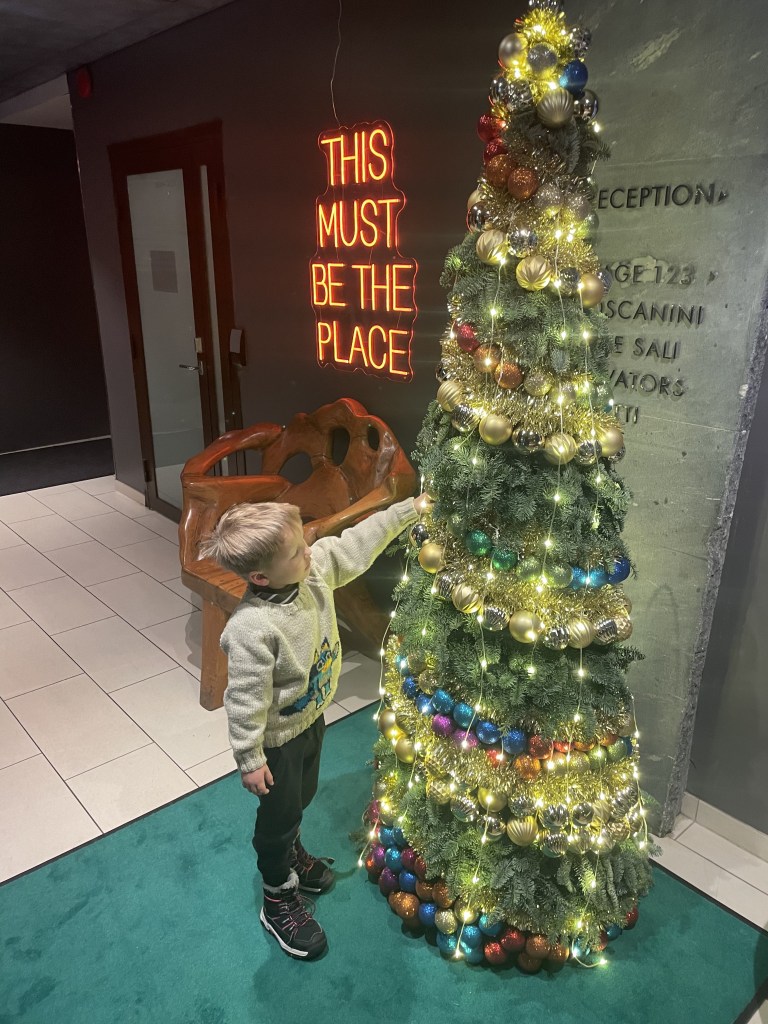
Mind you we did get to hang out at some more Christmas markets, look at some trinkets, ride a tram or two and Fi ate a lot of pickled herring. All before we got to jump on another overnight trip aboard the Santa Claus Express. Yep. “Buy the ticket and take the ride.” And once again children were too excited to sleep, so when we got into Rovaniemi at 7 am, it was fun trying to dress half asleep children for minus ten.

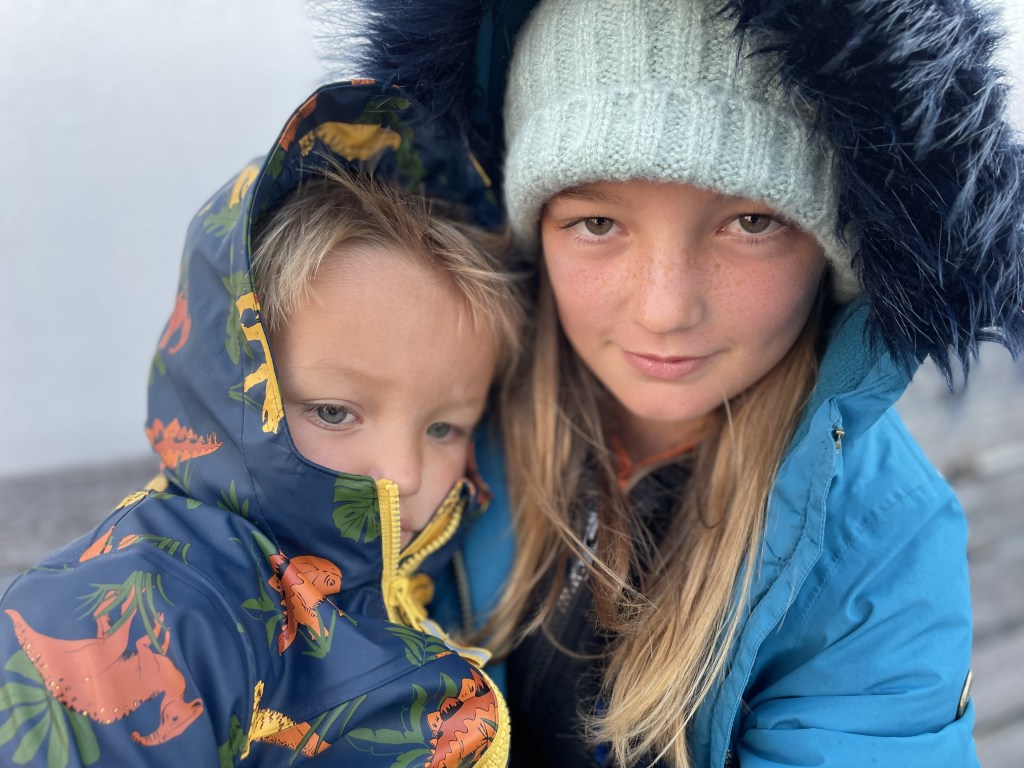
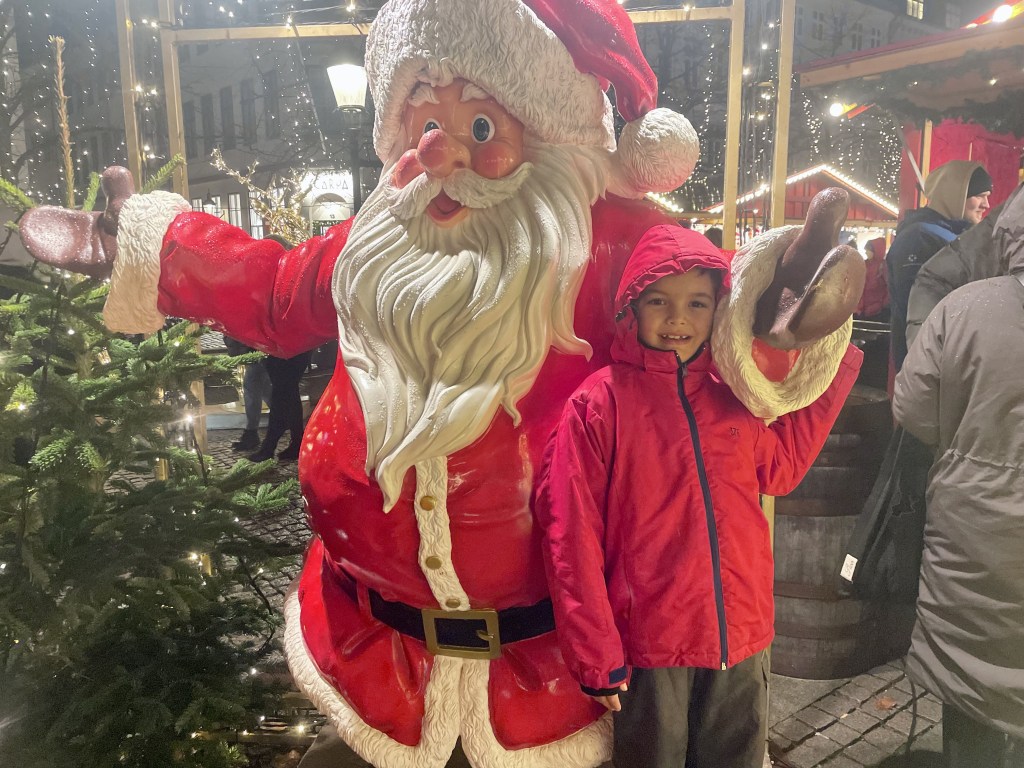
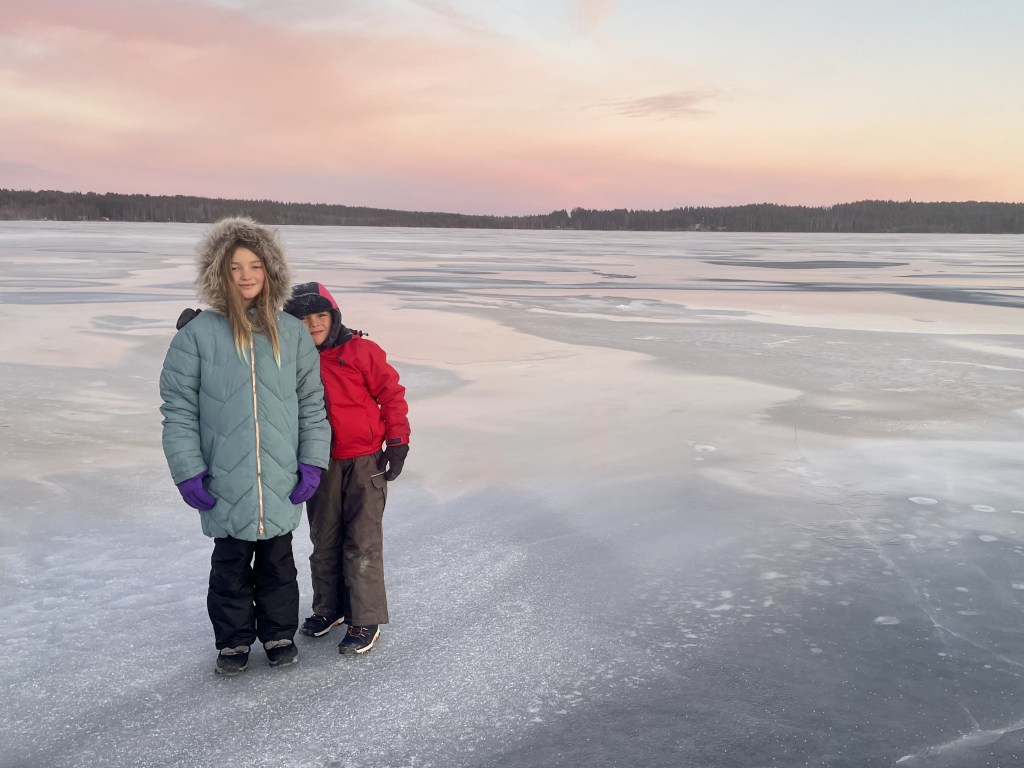
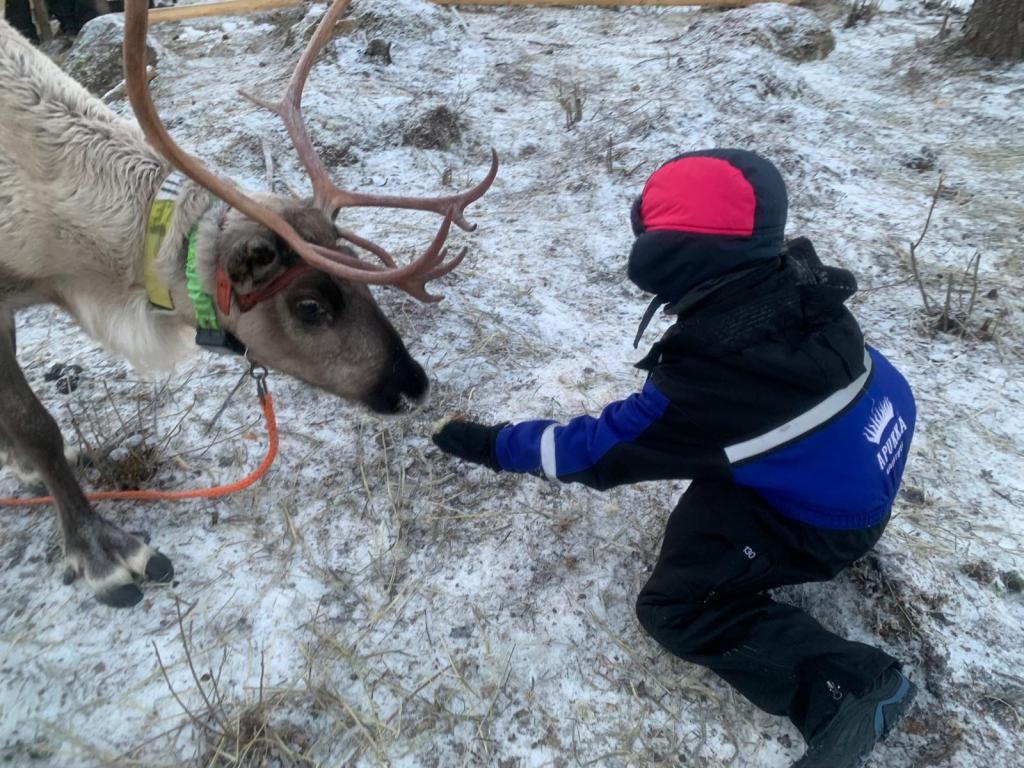
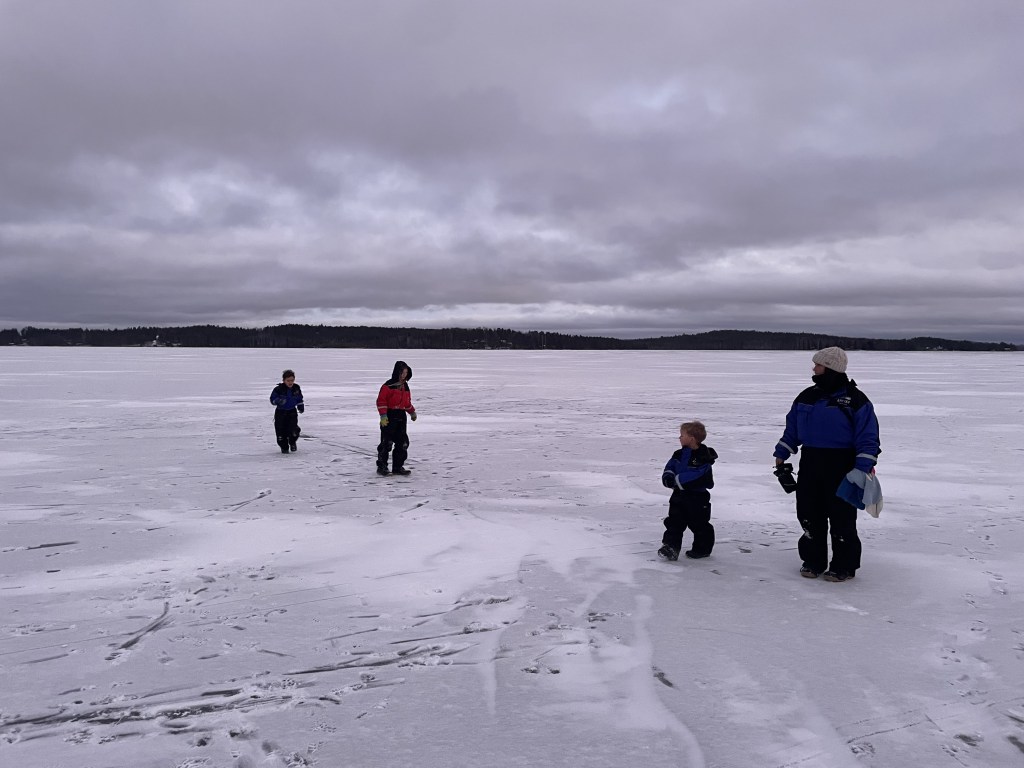
Rovaniemi is just geared for snow tourism, like Byron Bay is for Surfie-Hipster tourism. Can you blame us? We went full tourist, and didn’t go home empty handed. Huski rides, cross-country skiing, sledging, ski-dos, snow balls, late night Northern Lights and one little monkey hang out with the big bearded guru himself, Saint Nick, Sinterklaas, Santa Claus.

So, yeah. Now we’re back in the UK, decorating the grandparents house with gaudy, christmassy spledour, awaiting a holiday season with our British contingent and knowing there’s a 35 degree heat January waiting for us, with a creek running around it, with friends recovering from cheese comas, chickens laying in the coop and veges that won’t plant themselves.

Permaculture Kids – Djaning Holiday Program

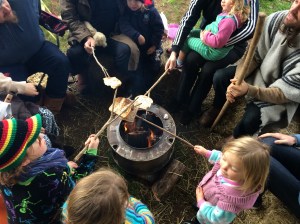
How can one describe being surrounded by beautiful, wild children all day? We’re not entirely sure. So here’s a bunch of photos and some amblings of our first Permaculture kids holiday program. It’s supposed to be a permaculture school. Or something like that.

We’ve got to let you in on a little something, though. This holiday program, it’s more an excuse to reconnect to the source ourselves. And the kids show us how it’s done. They know the way to go. We have plans, and schedules. They, more often than not, tend not to have too much more than the moment…

Dig up worms, taste them. Add water to the already soaked puddle. Jump in. Squelch. Taste it…

Make sparks with a flint and steel. See what catches. What magic appears with this new tool? This new place? This new now that is happening?

We see ourselves as benevolent shepherds and guardians. Encouraging as much joyful movement as is safe, kind and now.

In a place where AI isn’t a thing, screens are an anomaly, and fire is king. This is where we meet our kids.

Surrounded in thrumming cicadas, burping frogs and froglets and the white noise of rain. A singed finger from entertaining a curiosity a little too closely. A fresh cut from a newly sharpened blade who’s learning is deeper than any words. And the remembrance of the day as skerricks of clay are picked from the hair, feel as good as a fizzy drink and way better than Peppa Pig.

Becoming a Symbiote

by Fionn Quinlan – First appeared at Small Giants Academy Oct 11 2021

I was born into a city. Its seed was a convict settlement. Yet it was on Bundjalung land and country that I grew. Knowing this much alone could tell you my story. But first I must ask, what do you know of cities? What do you know of Bundjalung? Me knowing this will tell me some of your story.

When I look at many cities, I see a lot of straight lines and squares. From a distance they appear as anthills. Ant colonies conjured from the landscape.

When I look at Bundjalung country, I see ocean, rivers, creeks and verdant green hills littered with small towns and farms. Segments of ancient rainforest reminding us of another time.

For as long as I can remember I wanted to make more of that ancient rainforest. I wanted there to be this arching, overpowering green encasing my concrete clad school. I wanted vines to swing on and trees to climb. Cockatoos to screech when the teachers wouldn’t stop talking and Pademelons to cheekily distract me from my algebra.

So I planted and planted with my father and my family. I thought that if I just kept on planting I’d be like the book my father would read to me, called The Man Who Planted Trees. A beautiful story of a single man returning life to a barren landscape through the simple act of planting seeds for decades.

Through travel and study I was afforded a glimpse into the larger world and its workings. I began to know where the things that littered my daily routine came from. How they came into being. My computer of rare earth minerals extracted using slave labour, my clothing too much the same, and my food and the house I lived in not much better.

I came to see this picture writ large upon the world. A single species with a single purpose – to consume. Enact the goal of a virus. The mindset of a cancer cell. A parasite upon the globe like no other. The humans had arrived and we weren’t leaving until everything was consumed, converted, tilled, toiled and trashed.

I decided I’d take back my agency. I’d take responsibility for what it was I was consuming. I became vegetarian, only bought second-hand goods, rode everywhere, volunteered at organic farms and soup kitchens, joined protests, attended every permaculture and green living course I could find, and moaned at all my friends and family to change along with me (sorry).

It wasn’t until I began living on the land, growing my food, building my house, connecting with the land base that I began to realise that it was a story which had held my attention. It was a story that had me believe that the only option I had was to consume or be consumed. This story is our culture.

I’m lucky enough to live on Bundjalung land. Stewarded by a living Indigenous culture that has nurtured it for tens of thousands of years. Working with the rhythms of the landscape. Identifying and discerning patterns to thrive in a land that is as beautiful as it can be harsh.

In my admiration of the Indigenous culture of my local area, I came to scratch the surface of a broader Indigenous narrative. One that penetrates every continent. From the human-made, life-enhancing soils of the Amazon basin – Terra Preta, to the diverse and productive Chagga home gardens of Kilimanjaro, people of place are providing for themselves and their neighbourhood whilst building biodiversity, sequestering carbon and building soil. I find these happenings deeply exciting. They are symbols of hope in a dying world. And they’re everywhere.

At the Climate Action Summit of 2019 ,United Nations Secretary General,  Antonio Guterres said, “If we don’t urgently change our ways of life, we jeopardise life itself.”

So I’ve said to myself, “I want to change the ways of my life. I really want to inhabit this landscape meaningfully. I want my children to walk here in clean air, water and soil, for generations to come.” The answer is resoundingly clear. The best way in which I can foster life is by becoming a creature of place. Just like myriad of Indigenous peoples the world over I must develop context specific methods to create fecundity.

To do so I must follow a new story. One of the symbiote as opposed to the parasite. We have a choice. I know which one I want to be. Which will you choose?

The Long, Slow, Creative Hard Slog

“The long, slow, creative hard slog always wins out in the end.”

Contrary to how ‘floaty’ such a statement may seem there’s a great deal of evidence to support it. It’s evident in everything from entire societies being built on earth stewardship, see Amazonian societies creation of Terra Preta on otherwise relatively infertile tropical soil, to Van Gogh’s hard isolated life work which now occupies vast galleries created in his name, and the countless artists whom acknowledge his influence. I suppose we could analyse and attempt to interpret the rabbit hole that the last part of the above statement, ‘the end’, entails. Though this is far too open to interpretation and has overt metaphysical connotations. Therefore allow us to briefly examine the long, slow, creative, hard slog bit.

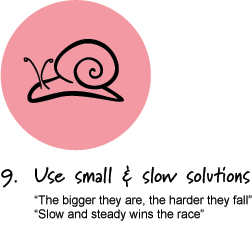
To begin with we must acknowledge the ninth Holmgren Permaculture principle; Small and Slow Solutions. As obvious as this principle may seem, within our current dominant paradigm applying such a thing within your daily routine is to run, or rather meander, directly against the conformity grain. Though the rewards are endless, in this life or the next, for ourselves and/or future generations. Be it in taking the time to study your local ecology which can reap untold benefits of higher yields, better return on your investments, be they in passive solar buildings or soil management, to embracing patience with yourself and others. The benefits of which seem unnecessary to state here.

Need we discuss the creative part? Yes. Perhaps we do. Djaning and all it entails has recently taken to realising itself as a Life as Art project. Which, for us, has untold benefits. To begin with, artists make mistakes, though instead of them being ‘mistakes’ as such, they can further become art. We recall a dear friend of ours smirking in wonderment whilst watching Jimmy Page playing another perfectly oulandish solo on Led Zepplin’s the Song Remains the Same film, and stating, “He hits bum notes, but then keeps hitting them! He’s making his initial errors intentional! And this makes them awesome!” We’d like to think we can do something similar, but on the land. (Duly noted, of course, that Jimmy is a master craftsman with decades of experience, and music is not geology. But I think you get what we’re trying to say).  We make mistakes, though so long as we don’t throw down our instruments and sob, we can learn from it, and if it’s in time and in tune with gaia’s guidance, it can become a hallmark.
More on the Life as Art concept in later posts. Now for the hard slog part… Hmmm. Yes that. Well, no matter the creative process we must work. Andy Warhol knew this and was known to have instilled Lou Reed with the ethic, even resulting in the song Work. For us we’ve often been caught singing the Temptations Just My Imagination chorus in relation to the thought of being able to create our dream, without the hard slog; it’s just our imagination. It’s therefore beneficial to look to others who have achieved, or are well on their way to achieving their ideal situation through diligent, applied labour and effort. Some that come to mind are our teachers, Geoff & Nadia Lawton at the Permaculture Research Institute, Robyn Francis at Djanbung Gardens or Ben Law, woodsman extraordinaire. Others are our friends and colleagues, like Merav and Janta at Karuna Insight Design. While others again are those that just wholly blow our mind, like Ernst Gotsch and his Syntropic Agriculture.

Clockwise from top left, Ernst Gotsch, Geoff & Nadia Lawton, Robyn Francis, Janta & Merav Wheelhouse, Ben Law.

Whatever or whoever it is, we feel we’re on the right track. That bendy, gravelly, wooded way with all it’s quirks, foibles and ‘perceived’ hiccups.

Oh You United Kingdom You

It’s rather hard to put succinctly the feeling of returning to this wet little island known as the United Kingdom. It’s a little like putting on one of your old pair of shoes; a little musty, possibly mouldy, but comfortable, welcoming and if a little spit and polish is applied as good as the day you first wore them. Upon stepping into these old shoes we’ve encountered old and new projects, rekindled friendships and developed some anew.

IMG_1941
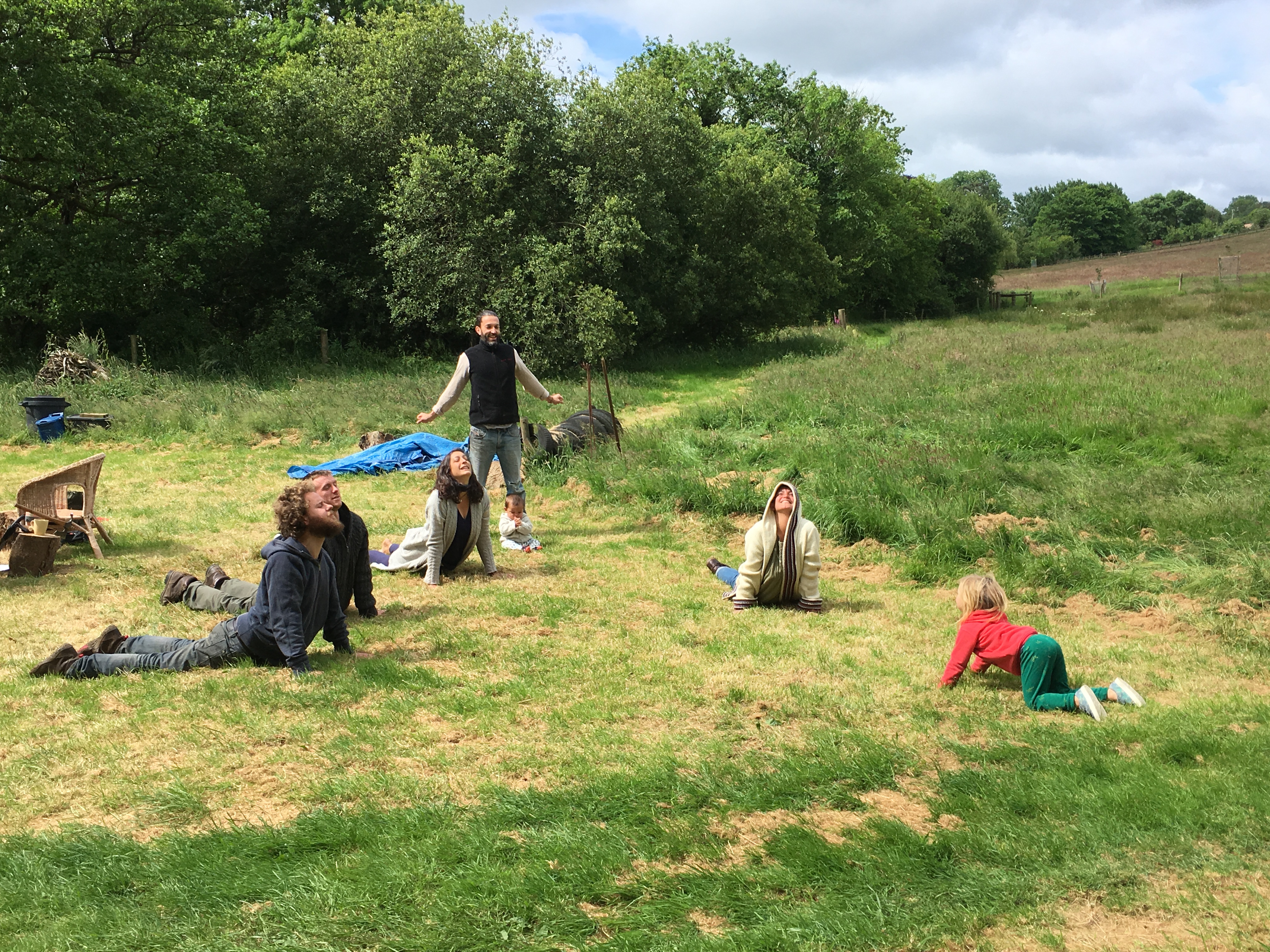
Making the time for some toddler led yoga with old friends

The unifying theme it would seem of the trip was in fact contrast. The individuality of this unifying movement known collectively as permaculture, has presented itself to us beautifully. We’ve tasted the social and interpersonal aspects of it as shared through the nurturing mentorship of friends and acquaintances, like Klaudia Van Gool. We’ve had our comprehension of potential alternative systems of governance explained in detail by the likes of Andy Goldring , Maddy Harland and others. We’ve been taken in, wined, dined and toured wonderous living classrooms such as Karuna Insight Design and Lammas Ecovillage. And we’ve consistently tasted some of the finest forage we’ve ever had the pleasure to have dance on our taste buds. With each experience being presented to us with the personal flavour and splendour of the individuals themselves.

This slideshow requires JavaScript.

One particularly special insight afforded us came from Karuna in the Shropshire hills. Fionn had been a WWOOFer here a few years ago and had been so taken by the place that he was adamant we had to return in whatever capacity. So when we managed to organise and co-teach an Introduction to Permaculture course there (a first for us, anywhere in the world!) it was serendipitous to say the least. Having the Wheelhouse’s allow us to share their space and guide us through their lovingly and painstakingly created ‘Sanctuary’ was truly a treat. The evidence of their care, their observation and their willingness to integrate seemingly disparate elements was and is everywhere to be seen.

All the variations we’ve been able to sample in this brief time has been a testament to the movement itself. Be it demonstrated in a social manner, through animal husbandry, large scale forest gardening, back yard tampering, or completely altering one’s life to continue the spread of vital, inspirational information pertaining to the continuation of sustainable means and livelihoods.

IMG_2700.JPG
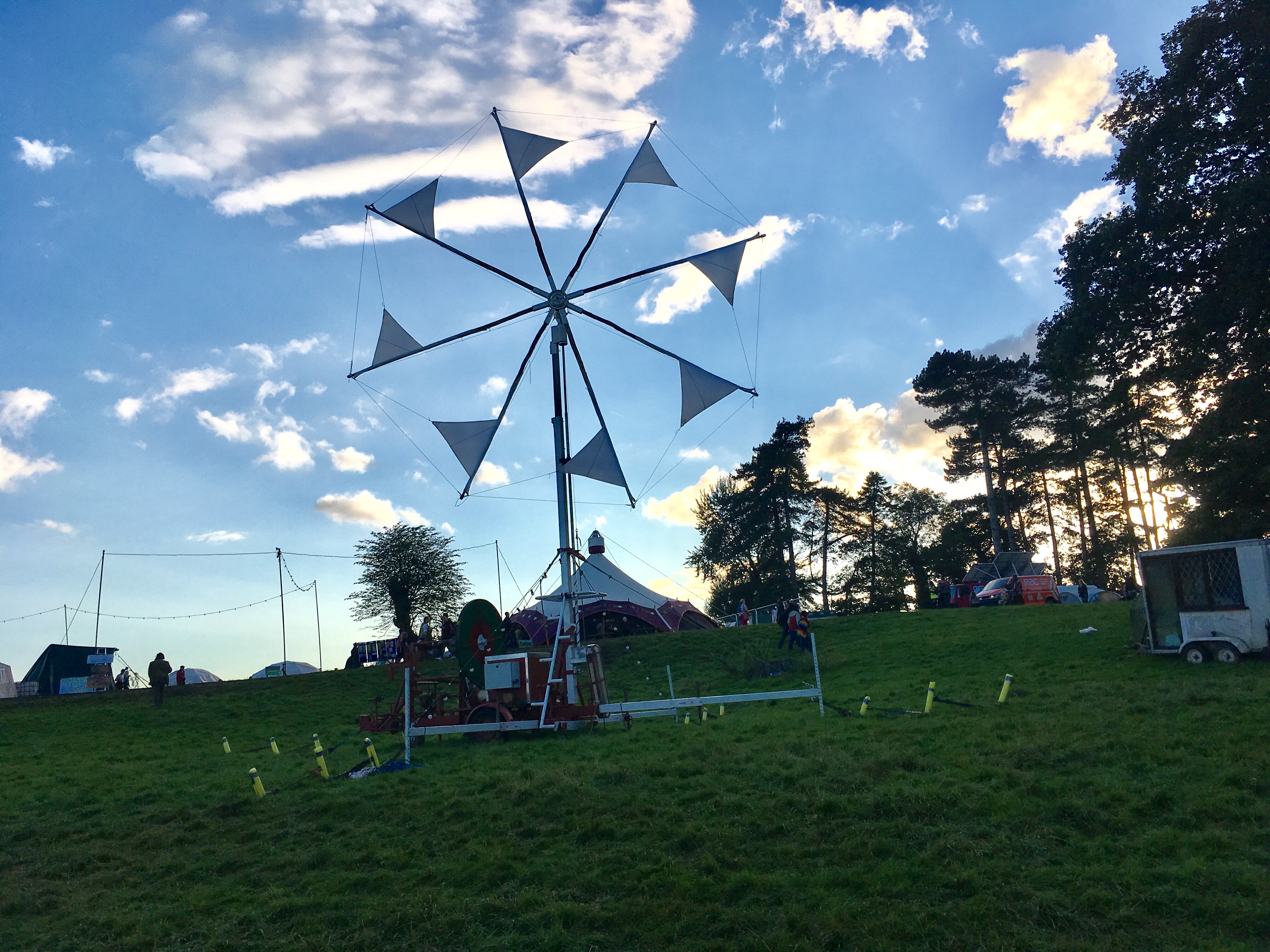
The windmill water pump at The Green Gathering

As we pack our bags for our return we’re thankful for so much. All these beautiful beings have again roused and shaken our understanding of what it is and what it means to be alive. With these memories in our hearts we happily venture forward into the next chapter of our little part in the quiet revolution.


Trust Yourself

We’ve reached a seemingly large, and potentially daunting milestone recently; We’ve altered this beautiful patch of land we call Djaning permanently. We’ve dug enormous holes in her. Ripped a large line through her middle following her beautiful contours. Turned up the earth, removed a ton or seven of her grass, sand and soil, and are now faced with the task and duty of completing this vast cosmetic realignment of her features.

img_0972
Digging the ridge point dam

When we look at it like this it certainly keeps us up in our little caravan, hoping we’ve done the right thing. Remembering that the sins of our father are visited unto the seventh generation… Reassuring ourselves through reading all the manuals, noting all previous experience from our elders, that show this type of restructuring of the landscape works. A seemingly extreme, though proven measure in trapping water and slowing it, thereby hydrating the landscape.

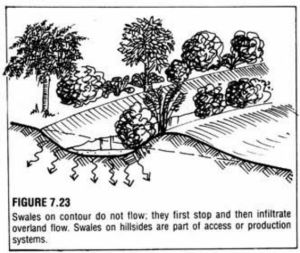
figure7-23swale

We know there’s other methods, and we will resort to these later. But this initial scarification is giving her a new skeleton. A new main frame. We now have two dams, one rather large, a valley dam, close to a million litres, and another, a ridge point, that’s around the two hundred thousand mark. Along with this a swale the length of two and half football fields reaches from the lowest point on the highest boundary through her newly acquired ridge point dam and out the other side. With our care and attention all will become bountiful habitats for micro and macro biology and everything in between, to grow, play and achieve their full potential.

figure-6-4-swale

We know all this, and are comfortable with our choices, and have had close to two years to really think it over. Though that doesn’t mean we’re not slightly daunted, even if it does seem we’re taking this rather large step in our stride. We’ve been stepping and running since we landed on this wondrous little piece of land. By any measure we have been small and slow, though by others it can certainly feel rather large and fast. It’s in this feeling that we can get lost and doubts and troubles can seep in. And questions, demands and expectations that have no real purpose being in your head or on your lips, except perhaps to perturb you further, also creep in. Questions that can’t, or needn’t be answered, and expectations and demands that will surely – in good time- be met.

We’ve found that it is in this phase that, most importantly, we must stop and breathe. Look to each other for a hug and a pat on the back. Not that we’re short of it, but a few kind words and a loving embrace goes a very long way to planting feet firmly on the ground.

dbjq8nl

We’ve recently heard on the wind that there should be an inclusion of a fourth principle to the three main ethical principles of permaculture, the central oft quoted three being, care of the earth, care of the people, and return of the surplus. The fourth to be considered is care of one’s self. This is hard not to agree with. It would appear it’s included in care of the people, but all too often we focus our energies on others and are left feeling drained without allocating sufficient time and energy for self soothing and reassurance.

It would seem in hindsight, if it weren’t so lovely and horrendously obvious, (and quite likely it is to many) that we must be gentle with ourselves, as we’re the only us we’ve got.

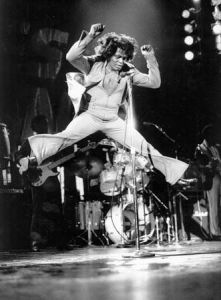
In the words of James Brown “Jump back, gonna kiss myself.”

33cfe48acb984878d084d36c80490cc4


To be a Dreamer and a Doer

The winter months here on our little soon-to-be farm have brought some interesting changes and realisations, here’s hoping we can recount a few for you.

We feel as though we’re finally getting to see some changes. We’re almost 6 months in and as we started in late summer and are now well into winter, we’re beginning to fully comprehend the necessity of the first principle of Permaculture, Observe and Interact. Noting little pockets of frost and which plants can and cannot hack it, how micro-climates can be provided by an array of things hitherto unknown to us, watching the migratory flocks of birds, and seeing the real slowing down of growth. All interesting. All integral for us to better understand where we are and how we can better live in harmony with changes for now and in future.

Red sky in the morning, our delight?

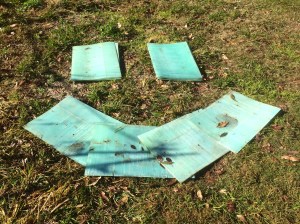
Another happening that has  become evident to us is something Geoff Lawton often recalls when teaching his Permaculture Design Courses; a time he confided in Bill Mollison and asked, “How do I know I’m getting it right?” To which, Geoff says, Bill replied, “Resources will gather around you, and more often than not they will be in the form of people.” It’s likely too early to tell but we’re just beginning to feel as though we may be on the right track. Resources of the non-biped variety have been pooling in dribs and drabs; friendly neighbours leaving us seeds, and tree guards  on our doorstep, a few tarpaulins, a fuel canister, and several large bags of a variety of fresh, local veges. We’ve also been blessed with many visitors, hard working or otherwise who’ve all contributed to our little piece of land in their own unique way.

The formation we found the gifted tree guards in!

There’s another that’s really sinking in, and it’s something we’d talked about long before we arrived on our land, and that’s the often misunderstood or overused concept and term, ‘necessity’. You may not need to live ‘off-grid’ for 6 months to comprehend it, though it certainly seems to have helped us. Questions have pervaded our once common place assumptions about living and daily existence. A simple example is that we’ve begun adding a ‘Do we?’ to many statements. “We need to install a shower with hot running water… Do we?” If we go back to our permaculture principles and apply small and slow solutions we come to the realisation that we can have a hot shower but in a manner that addresses our ethics via closing loops and creating little to no waste. To some it has the potential to sound like a lengthy process, but to us we enjoy our bucket wash under a tree. It allows us the time to assess and evaluate, reconnect as well as water the tree and harvest any run-off.

Early morning breakfast preparation

On a final note, we’re learning to not take ourselves so seriously, acknowledging the fact that we have to be dreamers and doers, and that there’s no defined dead line for this life.


This is Permaculture, right?

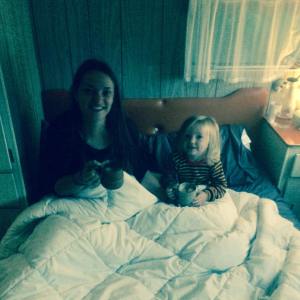
It’s 6am and it’s 2 degrees inside our caravan. The frost has killed off what was looking like some promising Cucumbers and Zucchinis, along with about 30 Pigeon Pea saplings and a bunch of other stuff. We’re wearing multiple layers, under the covers, drinking some not-too-bad Chai, and laughing. Guttural laughing. It started as laughter due to our 2 year old friend and companion doing something hilarious, it then gradually built as we began making fun of ourselves and the situation we’ve not only find ourselves in, but knowingly, willingly put ourselves in. Then comes the question (or is it a statement?) “This is permaculture right?!”

HotChoc

For all our pondering, we guess it is. Well, sort of. As we’ve heard on more than one occasion “It depends”. This is our brand of permaculture. The one where you drop more or less everything and begin to reinvent yourself literally from the ground up. Now we suppose that if we were horticulturalists, engineers, or any brilliant combination of anything that may serve our new found direction well, this whole process would, or could possibly be a whole lot easier, or just different. But we’re not. We’re artists, and educators, and learners and lovers, with a few healthy streaks of farm and woodland through us.

Dirt Path

One of the key tactics we’re learning is to drop our egos and ask questions. We always hear, “There’s no such thing as a dumb question”, but when you’re in ‘The Bolt Barn’ asking “Where do I put the bolt?” or in the local plumbing shop asking “Where does the water go?” you tend to feel you’re stretching the limit of that saying. But we’re learning. Every time we do ask an ‘interesting’ question we’re one more question away from complete ignorance and a little closer to implementing our permaculture dream.

Djaning real estate
The end of the ridge is where you’ll find Djaning Farm.

Be Here Now

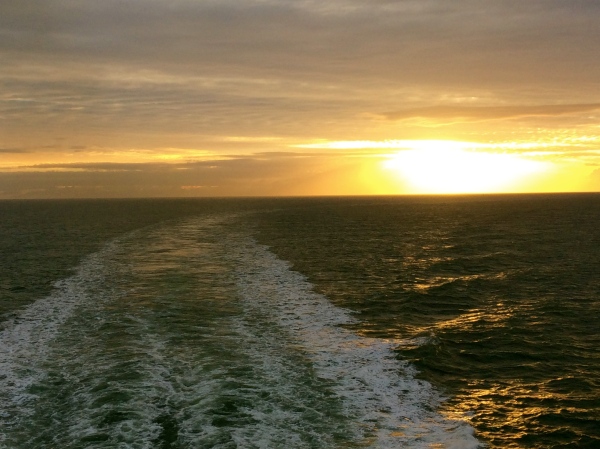
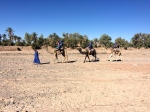
So we boarded a ferry as excited as could be and rushed off into the blue aboard a giant ship, with hopes and expectations colliding with a calm trust. A trust of the sea, the road, and of each other. We’re not so sure we’d ever felt as alive as we had over the last few months. How were we going to top it? A zig-zagging trip through France, and Spain might do it? How about a trip to the desert? The desert, The Sahara? That certainly sounded like a great deal of fun.

As a picture says a thousand words, we’ve decided to let them do the talking:


As we’ve written and posted this almost 6 months after the fact, now working our little piece of land (little is certainly subjective), and taking each day as it comes and riding the roller coaster of learning, there’s a glimmer there that wasn’t there at the time. Something that can only be understood with retrospect. It certainly was fun, though it’s still close enough to remember the bumpy times. Those infinitesimally small moments that seemed so big. Something to keep with us as we venture into our new lives. Be here now.

On The Road

Our first stop in our green beast, (aptly and fairly named Arvan “our van” by our two year old) was Carmathenshire in South West Wales for a stay with Laura’s brother, his wife and their two boys on their recently purchased 16 acre small-holding, Rhiw Draenog or Hedgehog Hill Farm.

Hedgehog Hill Farm
Hedgehog Hill Farm

They had also experienced a similar disillusionment with our human predicament and had been looking into permaculture as a positive solution. They had sold their house in the suburbs of southern England and found a gem of a property in Wales. They were a few steps further along the path than us and were equally nervous/excited/daunted by the prospect of building and creating a life with positive repercussions for the future. We were lucky enough to camp in their garden (house paddock) for a month and get used to our new living conditions.

Arvan in Pooh Corner

This initial part was particularly hard due to the fact it was such a large change, Fionn was in Herefordshire for the first 10 days, and our little girl making regular complaints along the lines of “Tweety birds, no! Where are the Nee-Nors?!” making things rather challenging for Laura. But gradually as we began seeing the direct results of working together as an extended family the initial awkwardness faded.

A family of wheelbarrows.

This short period became a great learning experience for all involved, as Laura’s brother’s family had only recently moved into their current house (with no windows!), we had the fortuitous opportunity of learning some of the baby steps phase together. Once Laura’s brother’s two boys took our little lady under their wing, showed her the best hiding places in the long grass, got stuck into some of the hard graft, gave her ride-arounds on their toy tractors and most importantly showed her where to source the blackberrys, things became a great deal easier, and the familial re-wilding came into it’s own.

Digging out a polytunnel in Wales
Creating a self watering polytunnel

Cob Oven - almost there
Cob Oven – almost there

In the process of building a cob oven, coppicing a great deal of Hazel, mulching even more Monkey Puzzles, swimming in their little stream umpteen times among many other things, we  would often get far too excited about how things should be implemented and slowly came to understand that everyone needs to make their own decisions and their own mistakes in their own time. Since leaving we’ve been able to see and have begun to comprehend how ideas, like those at Hedgehog Hill Farm, can develop into future masterpieces regardless of what anyone else says, against the current, against all nay sayers. With this seed of inspiration and optimism we set off for Cornwall.

Looe
Looe, Cornwall

We had volunteered to help out at on an organic farm whilst they ran a Permaculture Design Course. This experience couldn’t have been richer and more engaging. The venue – Keveral Organic Farming Community, the people – beautiful, intelligent, open, endlessly inquisitive, and the subject matter were everything we were hoping for and more. We felt we had found our tribe.

Keveral PDC Trobe

This experience took us to some places that were on our lengthy list of ‘places to see that inspire’, including Martin Crawford’s forest garden at the Schumacher College and the Land Matters Cooperative. It also gave us direct experience in foraging (not just for a few bits but near on entire meals),  woodcraft, mushroom cultivation, and other basic survival skills that have left an indelible mark. We also had the great pleasure of being able to sit in on lessons, when not preparing food, from some of the best teachers the UK has to offer.

Picking wild plums in the food forest

We’ve been able to keep in touch with many of these beautiful people since this time and we’re not surprised but are very pleased to see and know that we’re all applying ourselves as best we can to various projects all over the world. Such a special moment in time for us and our little family, one not soon to be forgot.

All this and the summer was just beginning.


Trouble in Paradise

It’s very easy to get caught up in the world, to forget to be human. It would seem right at the point everything was ready to happen it very nearly all fell apart.

We had our land, we understood largely what needed to be done in order to provide for ourselves and were working towards it on a daily basis. Yet somewhere between finding this future paradise and making the life changing shift to occupy the land and the lifestyle, we both fell victim to seemingly separate ailments that had a very similar core.

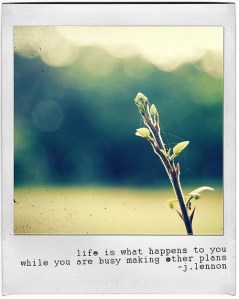
life-is-what-happens-to-you-while-you-are-busy-making-other-plans

With the ever humbling application of 20-20 hindsight we now know where and how it happened. We had become so preoccupied with the end goal and our future that there was no room left for living in the present. Fionn always pushing, backed by an aggressive holier-than-thou moral code and Laura ever cautious, and overtly sentimental. We had become too attached to an idea well before it’d even begun. These two things nearly broke us as we both continued to fight to be heard.

As many couples do in such situations we took a break from each other, reassessed what needed to change, made drastic attempts to change them, all while drip feeding each other new information about our individual progress. The ideas that kept resurfacing were stillness of mind and presence of being. Why work towards something that’s making us forget why it is we’re doing it in the first place? We wanted to make the world a better place and were destroying each other and those around us in the process.

Never miss

So we pulled the plug. We wanted to get out and see and do while we still could, before we got down to some serious work on our farm, we thought, ‘Let’s live now, now!’ Seems ridiculously simple, but at the time it was one of the most challenging processes we’ve ever attempted, and are still attempting to this day.

Another issue that became clear was that the convenience of living in a modern city was about as far away from our idealised future as possible. First we decided we needed to declutter. It’s amazing how much stuff you accumulate over a few years, particularly when you’ve got a child. We also needed to get out of the city, find some open air, and some stillness. Laura wanted to re-embrace an aspect of her youth, and it seemed an old Combi van would help her do that, which worked in nicely with the ‘out of the city’ thing. Fionn wanted to finish something he’d signed on to do in India years ago; a ten day silent retreat, and signed on for a trip to Herefordshire, which nicely tied up the ‘stillness’ aspect.

With these things in mind we decided not to renew the lease on our flat, effectively making us homeless. Then we sold and gave away all our stuff, well the vast majority of it, and put in boxes the bare necessities, tucked them away in Laura’s parents attic (thanks Nanna & Papa x), then hit the road. All three of us in our little green Combi van.

Nietzsche


Some Backstory

IMG_1339

We met in Sihnaoukville, Cambodia. Laura was volunteering for a children’s charity, where as Fionn was on indefinite hiatus from a fledgling teaching career. The one thing, among many others, we obviously had in common was a desire to “make the world a better place”. Of course at that time neither of us had any idea where that would lead us or how it was we were supposed to achieve such a vague life goal.

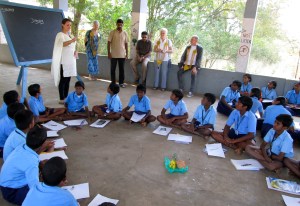
Laura teaching an Art class in Tamil Nadu

So, we fell madly in love, of course, and jumped on a great many bandwagons of “making the world a better place” as we went along. We lived and worked in India and Ghana. (Fionn for almost a year in India and both of us for 6 months there while Laura was pregnant with Iyla). We joined Occupy,  marched with Anonymous, cooked free food and attempted to discuss the major issues with anyone who was within earshot.

Million Mask March
London Million Mask March

Fionn really wanted to make “changing the world” his life and completed a Masters in International Development with his main interest being Political Science and Social Psychology. Although it was Fionn’s degree, we both ended up learning an enormous amount. As most good couples know, one can’t go through a life changing experience without the other also learning from it.

Unfortunately the main thing that was learned through the lengthy and at times brutal learning process was that basically everything that the conventional governmental and non governmental organisations had to offer, from our perspective, only served to further exacerbate our current global dilemma. Though what was potentially the worst of all was that very few within our immediate group of friends and associates wanted to know about it, or they did, but they were unwilling or stated they were unable to do anything about it.

After about 3 years of thinking and questioning that reached some very deep and dark places, the only genuine, yet rather vague conclusion we could come to was to contribute as little as possible to our current trajectory. The best way to do this, we felt, was to get off grid and supply as much of our own needs as was physically possible.

Then we found this…

DSC_0206


Create a website or blog at WordPress.com

Up ↑